


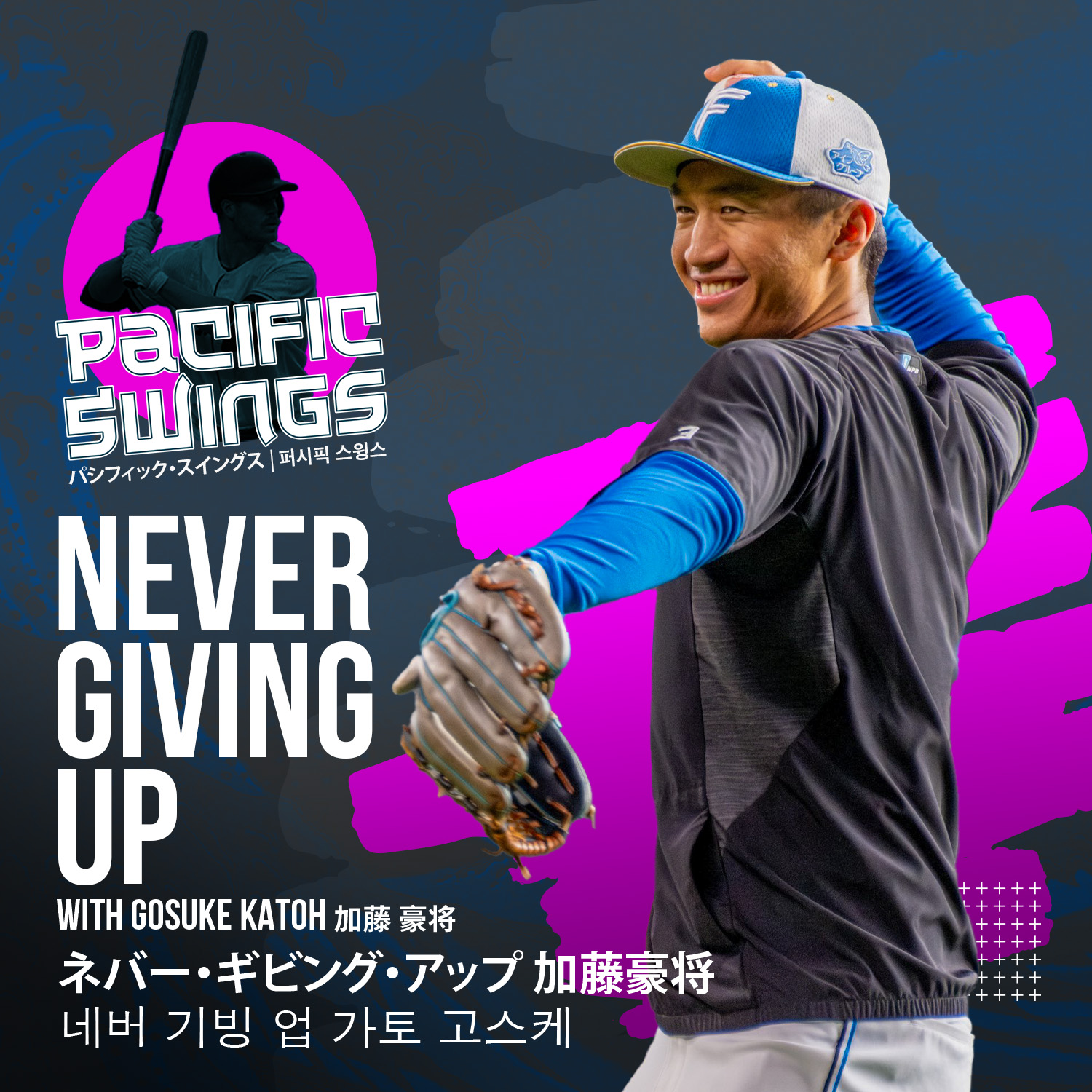
After 1,371 days away from Major League Baseball, Dietrich Enns stepped onto the mound for the Detroit Tigers organization last week, marking a remarkable return to American professional baseball. But the 34-year-old left-hander’s path back wasn’t through the typical minor league grind; it was forged across the Pacific, through three transformative years in Japan’s NPB and Korea’s KBO. Listen to the latest episode of Pacific Swings.
From Minnesota to the Pacific
Enns’ journey began conventionally enough. Drafted by the New York Yankees in 2012, he worked his way through their system before being traded to Minnesota in 2017, where he made his MLB debut. After stints with San Diego, Seattle, and Tampa Bay, the COVID-19 pandemic disrupted his trajectory, leading to a brief stint in independent ball before the Rays picked him up.
Then came the call that would change everything. “The opportunity came calling and my wife and I thought it was a great opportunity to go experience Japan and different style of baseball and different country”, Enns explains. “We jumped at it.”
The Learning Curve
What followed was an education in adaptation. Beyond the obvious cultural adjustments—earthquakes during his first week, navigating Tokyo’s train system, communicating with teammates—Enns discovered that even the fundamental tools of his trade were different.
“The biggest difference is the MLB to both the Japanese ball and the Korean ball is the texture”, he explains in the episode. “The seams are a lot lower on the MLB ball, the texture of the baseball, actual baseball, the leather is a lot slicker.” The adjustment wasn’t just physical; it required rethinking his entire approach. “If these balls are breaking differently, then you’re going to be wasting pitches.”
Enns was smart enough to request Japanese baseballs before even arriving, using the offseason to familiarize himself with how his pitches would move. “Every throw you make and catch play is something you can learn as an opportunity to learn from it and figure out how to how your pitches move.”
Baseball, Asian Style
The differences extended far beyond equipment. Enns was struck by the rep-based training philosophy in Japan, where he witnessed bullpen sessions of 150 pitches. More than triple what American pitchers typically throw.
“You have to really get creative as a pitcher of how to get guys out, how to read swings.”
The game itself demanded evolution. “You’re facing a guy maybe 30 times a year”, Enns explains, contrasting this with MLB’s six or seven meetings. “You have to really get creative as a pitcher of how to get guys out, how to read swings.”
His first year in Japan went well, relying heavily on his fastball-cutter combination. But the second year proved humbling. “These guys are good hitters and they’re able to make the adjustments”, he learned. “You can’t just be a two pitch pitcher over there.”
Korea and Growth
The move to Korea’s LG Twins in 2024 provided new challenges and opportunities. “I felt like I was able to expand that and add more pitches and just sequence better and execute at a higher level,” Enns reflects on his KBO experience.
“Every game in Asia feels like a playoff game, based on the fans.”
The fan experience in both countries left an indelible impression. “Every game in Asia feels like a playoff game, based on the fans”, he says. “You get so much energy from the fans that even in spring training, is really crazy and it’s hard to replicate.”
Facing Elite Talent
Throughout his Asian odyssey, Enns faced exceptional talent that reinforced his respect for the level of play. In Japan, he marveled at Hotaka Yamakawa’s 44-homer season in a pitcher-friendly park: “The next closest guy in the whole league was like 20. So he like double the guys homers.”
In Korea, young superstar Do-yeong Kim left a lasting impression—literally. “He got me on an opposite field Grand Slam last year,” Enns admits with a rueful laugh. “This kid’s like 20 years old, had like almost a 40-40 season.”
Full Circle
Now back in the USA with the Detroit Tigers, Enns carries with him more than just refined mechanics and an expanded pitch repertoire. So, what was his biggest lesson? “Just embrace your time”, Enns said. “We look back on our time in Asia, in Japan and Korea very fondly at some of the best years that we’ve had.”
Looking back, 1,371 days without starting an MLB game clearly weren’t lost time. They were an investment in becoming not just a better pitcher, but a more complete player.



Leave a Reply